
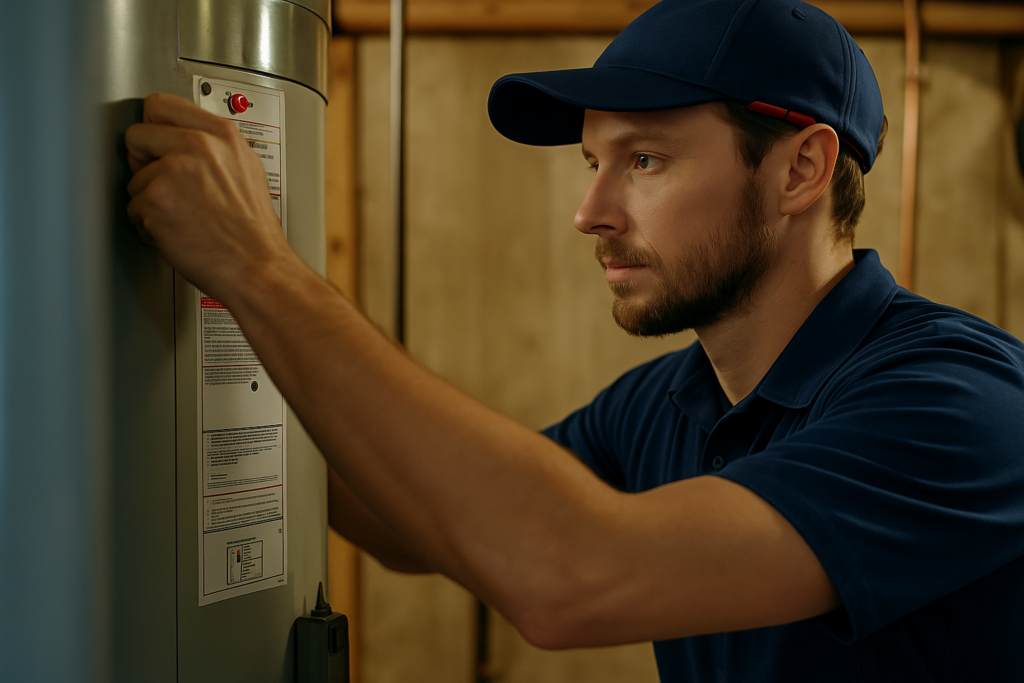
Emergency Furnace Repair
A malfunctioning furnace transforms your comfortable home into an icebox within hours, creating dangerous conditions for young children and elderly family members. Our solution-focused approach means we don’t simply patch symptoms; we identify root causes and deliver furnace repairs that stand the test of time.
Common furnace problems include failed ignitors, cracked heat exchangers, malfunctioning thermostats, dirty flame sensors and blower motor failures. Our service technicians in Texarkana, TX arrive equipped with diagnostic tools and standard replacement parts to restore heat quickly without unnecessary delays. We service all major furnace brands with manufacturer-level expertise.
Emergency Heat Pump Repair
Heat pumps provide efficient year-round comfort, but they face unique challenges during cold weather when your family needs heating most. These dual-season systems use reversing valves, defrost cycles and supplemental heat strips, all of which require specialized knowledge for accurate diagnosis and repair. The Air Conditioning, Heating and Refrigeration Institute reports that heat pumps can deliver three times more heat energy than the electrical energy they consume, making them remarkably efficient when operating properly. However, refrigerant leaks, failed reversing valves, frozen coils and defrost control issues can quickly compromise performance.
Our comprehensive heat pump repair process examines all critical components, including the reversing valve, defrost controls, refrigerant charge, electrical connections, and both indoor and outdoor coils. We provide 24/7 emergency service with live answering because heating failures don’t respect business hours.
Should You Repair or Replace Your Heating System?
Sometimes, heating replacement delivers better long-term value than repeated repairs on aging heating equipment. Furnaces and heat pumps over 15 years old operate at significantly reduced efficiency, often costing 20-30% more to run than modern systems while providing inconsistent comfort. Our service technicians provide honest assessments about whether replacement makes financial sense for your situation. If you’re not sure whether to repair or replace your heating system, ask yourself these questions:
- Is your furnace or heat pump 15+ years old?
- Have heating repair costs exceeded $500 in the past year?
- Are some rooms significantly colder than others consistently?
- Has your winter energy bill increased noticeably recently?
- Does your heating system make loud or unusual noises?
- Has your system required multiple repairs this heating season?
Getting Ready for a Heating Repair Visit
You don’t need to identify a faulty part before calling Lone Star Heating and Air. A few observations about the problem, along with clear access to your equipment, can help our expert technicians begin their inspection. When requesting emergency service, explain whether the heating has stopped completely or is still running with reduced output.
Describe Changes in Your Heating Performance
Think about what changed before you noticed the problem. Does the heating stop before reaching the thermostat setting? Is the airflow weaker than usual, or does the system start and stop repeatedly? Note when the symptoms occur and whether they affect the entire house or only certain rooms.
For furnace repairs, mention any unsuccessful attempts to start or unusual operating sounds. For heat pumps, describe any ice buildup or changes in outdoor-unit operation. Share recent service history and any displayed error codes without opening equipment panels. These details give our expert technicians a useful starting point for diagnosis.
Make Your Heating Equipment Accessible
Whether preparing for a scheduled visit or emergency repairs, clear a path to the indoor equipment and thermostat, and keep pets away from the work area. Move stored items that could prevent the technician from reaching the unit. If equipment is in an attic, closet or another restricted space, mention that when scheduling.
Leave panels, wiring and other components in place. You do not need to dismantle or clean the equipment before the visit. Having the model information and previous repair paperwork available can also help the technician understand the system’s history.
Heating Repair FAQs
What should I check before requesting heating repair?
Confirm that the thermostat is set to heating and that the selected temperature is above the current room temperature. If the thermostat uses batteries, check whether they need replacing. You can also look for blocked supply vents and inspect an easily accessible filter according to the equipment instructions. If these checks do not explain the problem, contact us to discuss whether a scheduled visit or emergency repairs are appropriate. Avoid repeatedly restarting the equipment or opening its panels.
Why does my heating system run without warming the house?
The answer depends on the equipment. A furnace may circulate air even when its heating cycle has failed, while a heat pump may struggle because of restricted airflow, a control problem or a refrigerant-related fault. Heat pump air can also feel less hot than furnace air during normal operation. If the indoor temperature keeps falling or never reaches the thermostat setting, a technician can check what is preventing the system from meeting demand.
Does frost on a heat pump always mean it needs repair?
No. A light layer of frost can form on the outdoor coil during cold, damp weather, and the system’s defrost cycle normally clears it. Thick ice that remains, repeatedly builds up or accompanies poor heating deserves professional attention. Avoid chipping away the ice or trying to force the equipment to defrost. Tell the technician how long the buildup has been present and whether the temperature inside your home has changed.
Can a heating problem increase my energy bills?
Yes. Some faults cause longer operating cycles or make the equipment work harder to maintain the desired temperature. On heat pumps, increased reliance on electric backup heat can also raise electricity use. However, colder weather, thermostat changes and utility rates can affect energy bills too. Comparing your energy use with similar weather periods can help reveal a pattern. Repairing a confirmed fault may improve energy efficiency, but the effect on costs depends on the problem and the system’s condition.
Don’t suffer through another cold night with a broken heating system. Call Lone Star Heating and Air now for emergency heating repair and replacement in Texarkana, TX, Atlanta, TX, New Boston, TX, Hope, AR, or the surrounding areas.